
IVF Success Rates
At Buffalo Infertility and IVF Associates, we believe that every patient deserves a clear understanding of their chances for success. Our IVF success rates reflect decades of experience, advanced reproductive technology, and individualized care designed to achieve the best possible outcomes. Learn how age, diagnosis, and treatment approach can influence your results — and why our dedicated team is proud to help families grow every day.
Society for Assisted Reproductive Technology (SART) published success rates shouldn’t be used to compare treatment centers because patient characteristics vary among programs.
You’re doing your best to gather information to make an informed decision about your fertility treatment, but the internet is a crazy place and the technology and science behind infertility treatment are amazingly complex. We’ll help you break down this data in a way that is easy to understand and we want you to feel very comfortable asking questions–everyone has t. Let’s take a look at a few key things to consider when looking at IVF success rates.
How do we define IVF success?
Does everyone have the same chances of IVF success?
The short answer is no. There are many factors that affect the probability of IVF success, including, but not limited to, age, health, and medical history. After you select “percentage of cycles resulting in live births” as your criterion for success, check the age cell to which you belong. SART breaks age cells into these ranges:
- Younger than 35
- 35 to 37
- 38 to 40
- 40 to 41
- 42 and older

Does a clinic's IVF success rate in my age cell represent my personal chances for success?
Your favorite elementary school teacher was right; you are unique! Every human body is unique and this is one reason why published success rates may be useful for leaning more about infertility and assisted reproductive technology (ART), but the only way to know more about your own probability is to schedule a consultation with a fertility doctor–a physician who is board certified in Reproductive Endocrinology and Infertility (REI).
Why are there different categories for "donor eggs" and "non-donor eggs?"
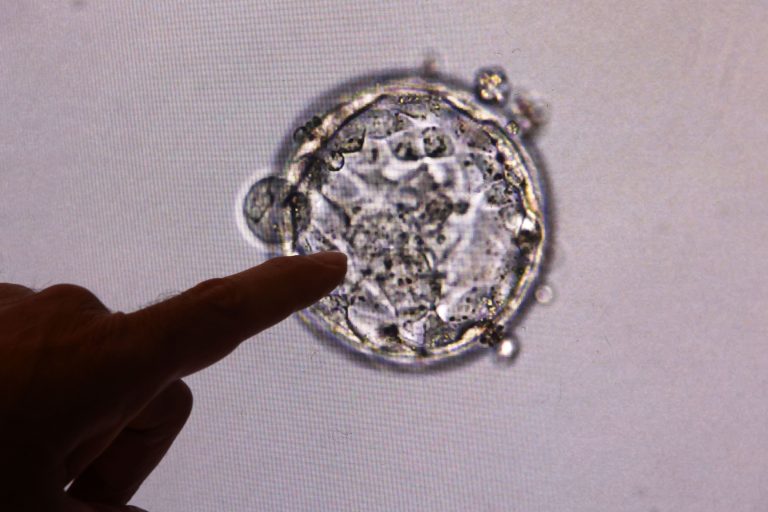
What's the difference between "fresh embryos" and "thawed embryos"?
“Non-donor eggs” essentially mean your eggs. For women who are unable to conceive using their own eggs, “donor eggs” may be used. Because donor eggs are not the same age as the person carrying them, the statistics are counted differently.
What does diagnosis frequency mean?
It may be helpful to think of the diagnosis as the reason for IVF. SART reports the percentage of IVF cycles that were reported as treatment to the following conditions
- Tubal Factor
- Male Factor
- Ovulatory Dysfunction
- Other Factor
- Diminished Ovarian Reserve
- Unknown Factor
- Endometriosis
- Multiple Female Factor
- Uterine Factor
- Female and Male Factor
How do I know if IVF will be successful for me?
There are many factors, but there is only one you. Your best information will come from a one-on-one appointment with one of our fertility doctors, because you deserve professional consideration that is specific to your individual journey. IVF may be the right choice for you, but it also might not be, you have a right to learn more. A consultation is not a commitment to treatment. Click here to schedule your first visit.
How do I know if IVF will be successful for me?
Real Stories
Discover real stories from our patients and gain inspiration for your own family-building journey. Our patient stories offer firsthand experiences across every stage of fertility care, providing hope, resilience, and encouragement. Explore these heartfelt journeys to feel connected, supported, and empowered.
My husband and I arrived at Buffalo IVF on a brisk, sunny October morning in 2019, hearts full of possibility
Many years ago I entered Buffalo IVF to see if I was a candidate to carry a friends baby who
Thanks to Dr. Bartels and the team at Buffalo IVF, we have two great kids – Easton who is 3
After being diagnosed with breast cancer at 26 and learning that I carry the BRCA gene mutation, I knew my
Firstly I have nothing but gratitude for Dr. Griffin when I first started going to Buffalo IVF. We spent 10
My husband and I began trying to grow our family in 2018, but my cycles were unpredictable after years on